
Modern Burnout
tapping into our Natural Intelligence in times of AI

Photo by Mahbod Akhzami on Unsplash
Perspective
Is your glass half empty or is it half full?
Sometimes when someone says out loud, “The world is so messed up right now,” I want to reply that there’s always something terrible going on somewhere in the world, we just don’t always know about it, or it’s not in our backyard so we don’t feel the impact.”
But I usually just agree instead, because there’s a certain truth to it — as the saying goes, there’s so much shit in the world, you’re bound to step in some at some point. But do we really know the beauty and power of goodness, peace, and love if we don’t have the opposites for contrast?
I just finished reading All the Light We Cannot See by Anthony Doerr. If you love nature, want to be optimistic about humanity, and have time to read a long novel, I highly recommend it. It is absolutely exquisite! I’m not always up for war novels, but the war was just the backdrop: what was really in the foreground of the story were beautiful snapshots of humanity, emotions, curiosities, passions and all the small, personal human experiences that get invisibly woven in with the ugliness of the collective. Whew! I made that sound heavy and lofty at the same time, but it’s really just like visiting a wasteland and finding the buried, sparkling gems in the dust.
Can we do that in our messy lives? Is a half-empty glass really that bad, or is the air in the glass important, too? I believe the burnout we experience in modern life is a glass-too-full syndrome. A perspective shift is in order if we want to prevent — or emerge from — a state of burnout.
Creating space
One of the arcs that Doerr traces in his novel is not a story or character arc at all, but the arc of technology and how radio made certain communications possible in World War 2. The narrative extends to the year 2014, through to the progression of how, with something such as texting, we are immersed in overwhelming streams of communication.
I’ve really been feeling that lately. It’s so easy to search for answers through a Google search, reach out to someone, and spread ideas online that it’s all so overwhelming. I’m tired of Facebook, Instagram, and other online platforms. I’m tired of the news (while simultaneously feeling like I should keep up with it). It’s not that I haven’t found great ideas and people and support systems on social media, because I have, but I just need a break from it.
Sometimes just figuring out what to make for dinner and keeping the floor clean are challenging enough amidst all the other thousand things to do. Never mind the constant onslaught of information.
I get the allure of having access to so much content, though. The world feels bigger, more knowable, and even easier to impact when it fits into our pockets in the form of a smartphone. But as a mother, sometimes my world feels so confined, and yet, I know the importance of birthing and raising decent human beings (no small thing!). This is why I so want to be that calm, collected mom that lets her kids feel their feelings; I try to be that mom that can hold space for her little ones to express themselves and feel the intensity of their emotions without criticism. The key word here is space. There has to be space in the day, in my mind, in our lives.
I love the idea of unplugging because we’re always all so plugged into the information stream; it’s the ultimate way to create space for ourselves. I appreciate Catherine Price’s work in her Substack publication, How to Feel Alive with Catherine Price (did you know it’s the Global Day of Unplugging? ). At the same time, I wonder a lot about yoga and self-care practices as ways of plugging into something that helps us stay balanced. For some, it might be religion or spirituality, for others it could be art or sports, and for all of us I would argue that we need time plugging into community.
Creating community is creating space.
Community is a place for support as well as action. We felt this a lot here in Chicago, as they did in other cities across the U.S., during Operation Midway Blitz when ICE flooded the Windy City. After about a month of that, I sensed a collective burnout that I believe persists even after months of scaling down our rapid response efforts in our neighborhood.
It’s amazing how disaster brings people together. How about we come together anyway, in times both good and bad? What better way to prevent burnout?
Capacity is physical, mental, and emotional
Creating space for ourselves and our community helps us build capacity.
Let’s revisit that glass-half-empty, glass-half-full image. Remember how I suggested that a full glass isn’t the best thing because really what modern burnout is is a glass-too-full problem?
I think it’s safe to say that in modern life, our burnout is mostly mental. That doesn’t mean, though, that the mental doesn’t affect the physical.
Think of this: many of our sources of stress aren’t even happening in real time. They are anticipated in the future or triggered from the past (they live mostly in the mental part of us). We expect a certain outcome, failure, or trauma and we brace ourselves (physically and mentally).
This is where we come back to the practice of creating space. How? We say no to more things. We stop wearing our busy-ness and hard-earned exhaustion as a badge of honor and start lovingly noticing where our limits are.
It’s not so much what we do that helps us deal with our burnout; it’s also what we choose not to do.
Some of my favorite ways to ‘do nothing:’
Read a book just for pleasure
Stream-of-consciousness journaling
Sit with a favorite beverage and enjoy it with my full attention or over a great conversation
Sit around with other families and watch the kids play at the park
Go for an aimless walk
Do some improvised, experimental yoga on my mat
Sit on the beach
Meditate or do yoga nidra
Tinker with my guitar or ukulele
Notice that none of these is actually ‘nothing,’ but they are low on the productivity scale and prone to being viewed as ‘not worth my time.’
Another way to frame the question, ‘how can I let myself do more nothing,’ is to ask, ‘how can I find more ways to relax and have fun?’ It’s really such a simple approach, almost too easy for how powerful it can be. This is what I mean by Natural Intelligence in this age of AI. Here’s a little throwback to an old post I share about yoga as technology in this age of technology.
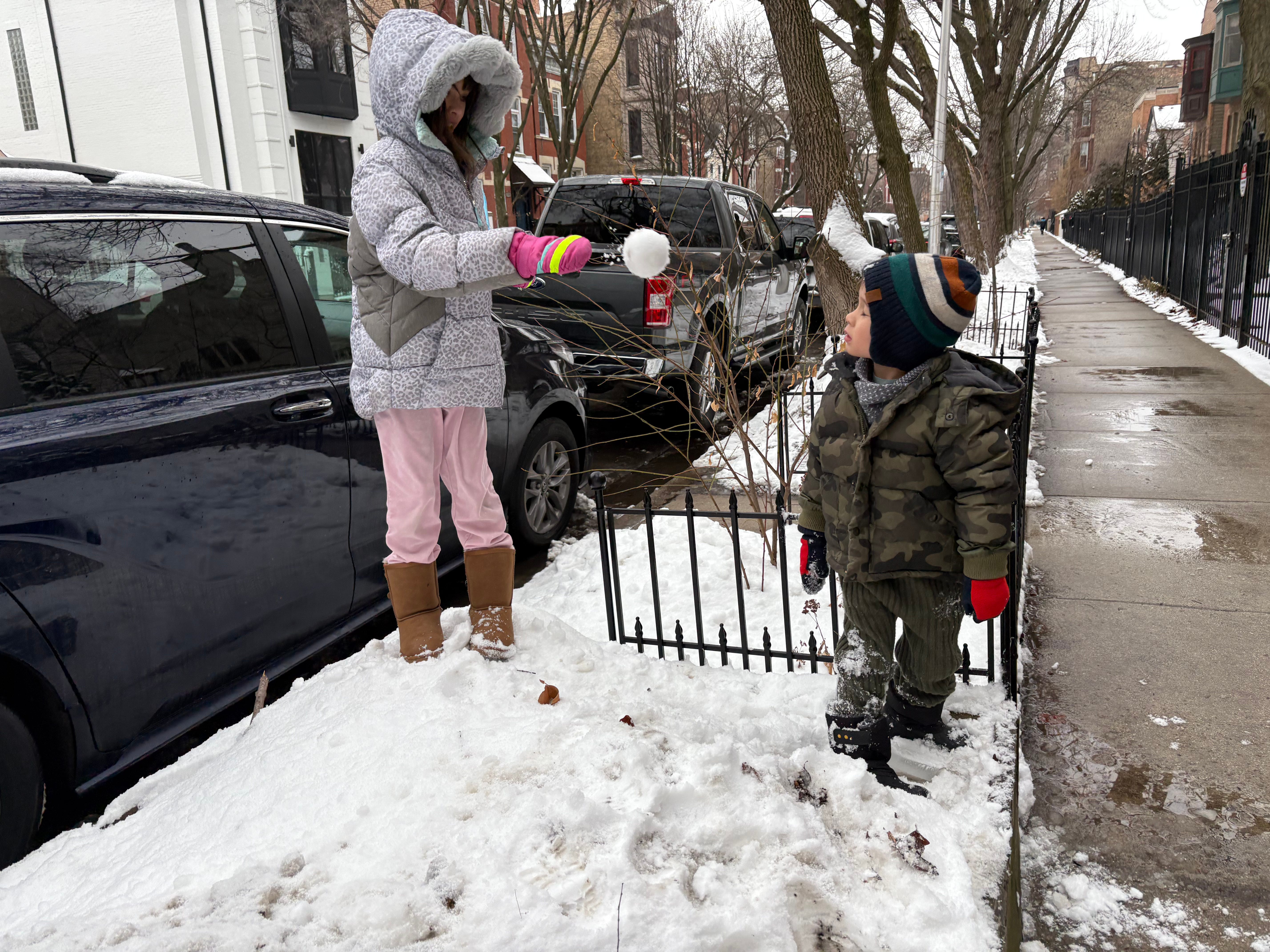
sometimes when I’m burnt out, I imagine I can see all the bad things coming: the terrible news, the next tantrum from my kids, the delayed flight, the family drama, the too-long winter…just like my son might have seen this snowball coming right toward his face, haha!
When to act and when to hang back
“This is the first, the wildest, and the wisest thing I know: that the soul exists and is built entirely out of attentiveness.”
-Mary Oliver
As I’ve been working on my novel (which has been in the works, off and on, for years) I’ve realized how to notice the pendulum that swings in me between receptivity and productivity. The reality is that no one can be productive 100% of the time, even though we live in a world that celebrates maximum productivity.
No wonder why we’re burnt.
Have you ever noticed if there’s a gap between your goals and intentions (which live in your mind) and the state of your nervous system (which lives in your body and mind)? How often do you bridge that gap?
Find a mental hack and the body follows suit; find a physical hack and the mind follows suit (see above in my list of ‘ways to do nothing’ and also below in my list of ‘small simple practices’). They are shadows or reflections of each other. This is the power that real yoga practice gives us, and we don’t even have to practice traditional yoga to get there.
And yet, so much of yoga practice, and other spiritual disciplines, get billed as ways to ‘go inward.’ It’s not that going within, introspecting, and reflecting on our thoughts or emotions isn’t useful. It is, but only as long as we connect it to the external, to our everyday lives and interactions with others.
In the case that we don’t have a strong network or community, and in the case that we haven’t been able to prevent burnout, we come to a crossroads where we ask ourselves: “Now that I’m burnt out, do I hang back and get some R & R, or do I take action to release stress and find equilibrium?”
I’ve already provided my little list of ‘favorite ways to do nothing’ above, which is my version of hanging back. But when it comes to taking action to shift out of a state of burnout, I suggest small, simple practices. Pulling from my Urban Yoga Mama archives:
A few years ago I posted about thinking outside the box with a very simple, but refreshing movement practice: adding round movements in yoga.
In July 2022, I posted on what I call the Pause Pose: one yoga posture of your choice that you do throughout the day whenever you think about it!
A post from Fall 2025 on slowing down called Slow Yoga.
A revised view on self-care in a post called Self-care and Self-aware.
A post called The Stop Sign of the Soul and my reflections on how to get out of a funk with simple practices.
But really, some of my favorite ways to take action to relieve burnout is to talk to a friend, ask for help with something, or revise my to-do list and remember that not everything on it is as urgent as I think it is.
Again, society doesn’t usually support space-making. You have to advocate for yourself, or maybe seek out support for it from your social circle or family.
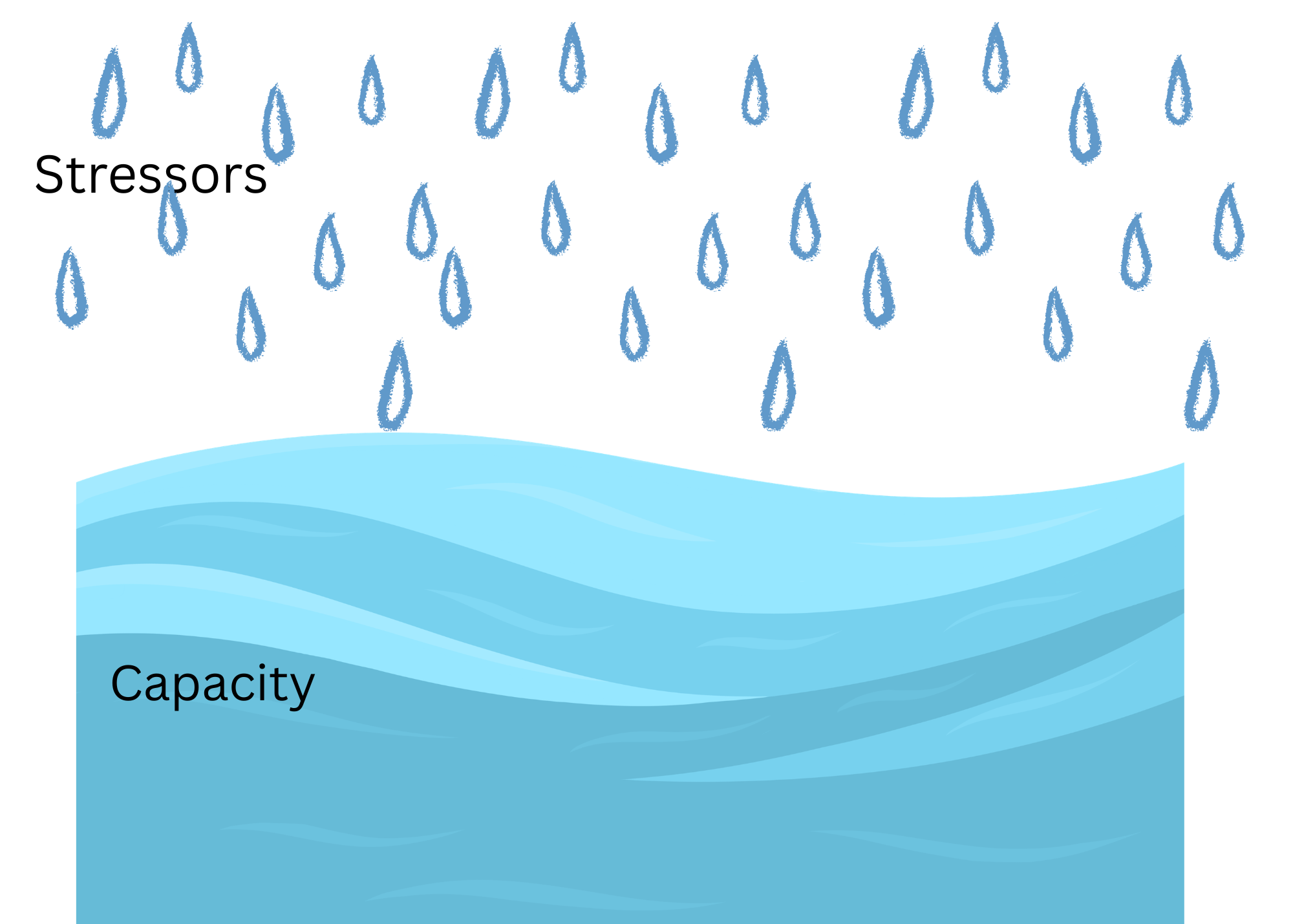
Back to our glass-half-empty, glass-half-full metaphor: I propose that we break the glass. Be a drop that can sometimes merge in the ocean we all come from, and sometimes rise up to become rain. Life is a repetition of these various states of flow.
Think of a raindrop falling into the ocean. It just gets absorbed immediately and there’s no worry of the ocean overflowing. To me, that is such a lovely image of capacity, and how we can learn to take whatever comes our way.
One final note on burnout: sometimes all it takes is some “vitamin N:” time in nature. I’ve dubbed myself Urban Yoga Mama because I love the city, but just like anyone else, I need time outdoors. There’s nothing as transformative as a walk among the trees, some time spent by a lake or ocean, and getting my hands dirty in the garden.
I was moved by your focus on the necessity of space. For me, that space is the Sangha I attend regularly. Thank you for advocating for the 'Natural Intelligence' of slowing down!